Introduction
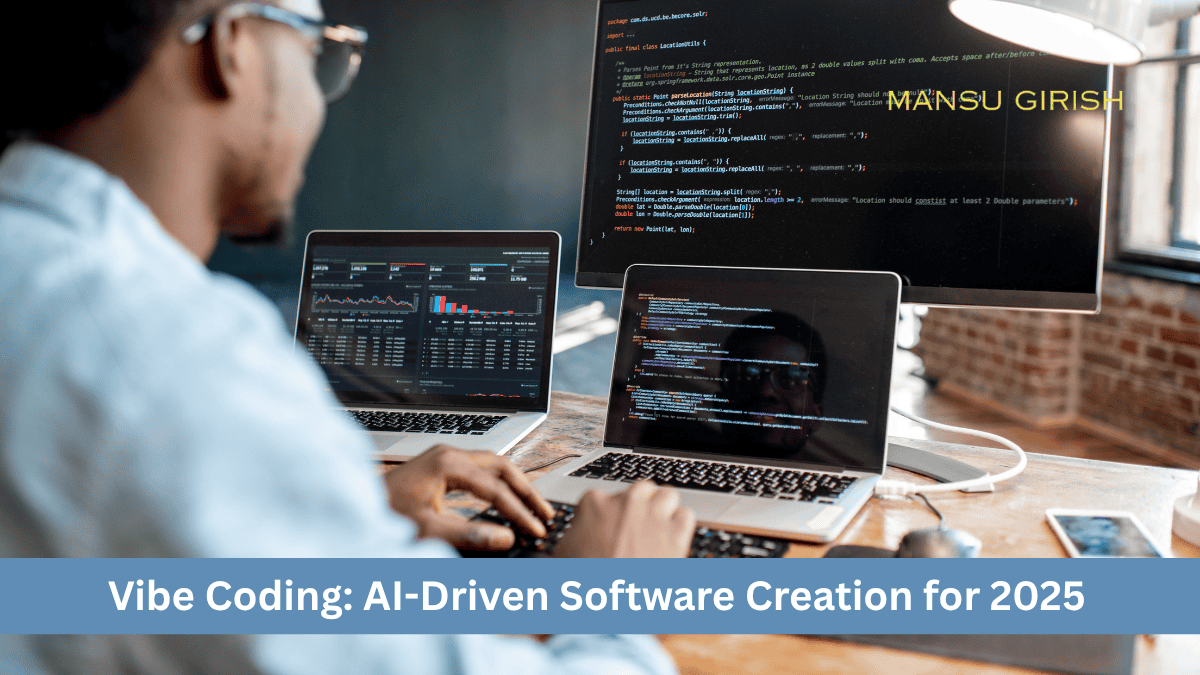
The future of software development is arriving faster than we imagined. In 2025, Vibe Coding—a new wave of AI-driven software creation—is transforming how developers design, code, and deploy applications. By combining artificial intelligence with human creativity, developers are now able to build smarter and faster than ever before. Let’s explore how AI-driven programming tools are reshaping the landscape of web and app development.
What Is Vibe Coding?
Vibe Coding refers to a next-generation development process where AI tools assist human developers in writing, debugging, and optimizing code. Instead of typing every line manually, developers now “collaborate” with AI that understands intent, suggests structure, and completes logic automatically.
These systems analyze millions of code patterns to generate reliable and efficient code for web apps, mobile platforms, and enterprise systems. Essentially, it’s coding at the speed of thought—guided by AI precision.
How AI-Driven Software Creation Works
Modern AI coding assistants like GitHub Copilot, Google Gemini Code Assist, and Replit Ghostwriter use large language models trained on massive datasets. They understand not just syntax but also context and goals, helping developers:
Suggest functions or code blocks automatically.
Debug errors and performance bottlenecks.
Generate UI layouts or database schemas instantly.
Convert natural-language prompts into executable code.
This synergy between human creativity and machine logic defines the essence of AI-driven software creation.
Benefits of Vibe Coding for Developers and Businesses
Speed and Efficiency – Projects that once took weeks can now be completed in days.
Reduced Human Error – AI detects mistakes and optimizes code quality in real time.
Cost-Effective Development – Automation reduces the need for repetitive manual coding tasks.
Creativity Boost – Developers can focus on innovation while AI handles the technical groundwork.
Scalability – From startups to enterprises, AI-driven workflows enable faster product rollouts and upgrades.
AI-Driven Frameworks in 2025
In 2025, frameworks like TensorFlow CodeGen, Meta’s Code Llama, and Google’s VibeFlow are redefining front-end and back-end automation. With AI orchestrating the workflow, developers can integrate APIs, databases, and UIs with minimal effort. This is pushing no-code and low-code platforms closer to full automation—empowering even non-developers to participate in software creation.
Challenges of AI-Assisted Coding
While AI-powered programming is exciting, it’s not without risks:
Security vulnerabilities due to machine-generated code.
Intellectual property concerns around AI-trained data.
Over-reliance on automation can weaken traditional coding skills.
Responsible developers combine AI efficiency with human oversight to ensure reliability, ethics, and long-term sustainability.
The Future: Developers as AI Orchestrators
By 2025, the role of a developer will evolve into that of an AI orchestrator—someone who guides multiple AI agents to co-create, test, and deploy code. This human-AI collaboration marks the rise of Vibe Coding, where intuition meets intelligence.
Conclusion
Vibe Coding isn’t just a trend—it’s the new standard in software creation. As AI-driven software development matures, it will make technology creation more inclusive, efficient, and creative. For businesses in Kerala and beyond, adopting these tools early could mean staying far ahead in the digital race.