Most beginners think ecommerce success comes from:
fancy themes
animations
lots of pages
complex design
That’s not true.
Conversion comes from structure, not decoration.
A good Shopify store doesn’t confuse visitors.
It guides them.
Today, we’ll build the basic store structure that converts — without overwhelm.
What “Store Structure” Actually Means
Store structure is simply:
How pages are arranged and how visitors move through them.
A converting store answers these questions quickly:
What is this store about?
What is being sold?
Why should I trust this store?
What should I do next?
If your store answers these clearly, conversion improves automatically.
The Biggest Beginner Mistake With Store Structure
Beginners often:
add too many pages
copy big brands blindly
clutter the menu
confuse visitors with choices
More pages ≠ more trust.
More clarity = more trust.
The Only Pages a Beginner Shopify Store Needs
You need just 5 core pages to start.
Nothing more.
1️⃣ Home Page – The Direction Page
The home page is not about “everything.”
Its job is to:
explain what you sell
highlight your main product/category
guide visitors to the next step
A good beginner home page includes:
Clear headline (what problem you solve)
Product highlight
Simple benefits
Call-to-action (Shop Now / View Product)
Avoid sliders, popups, and clutter for now.
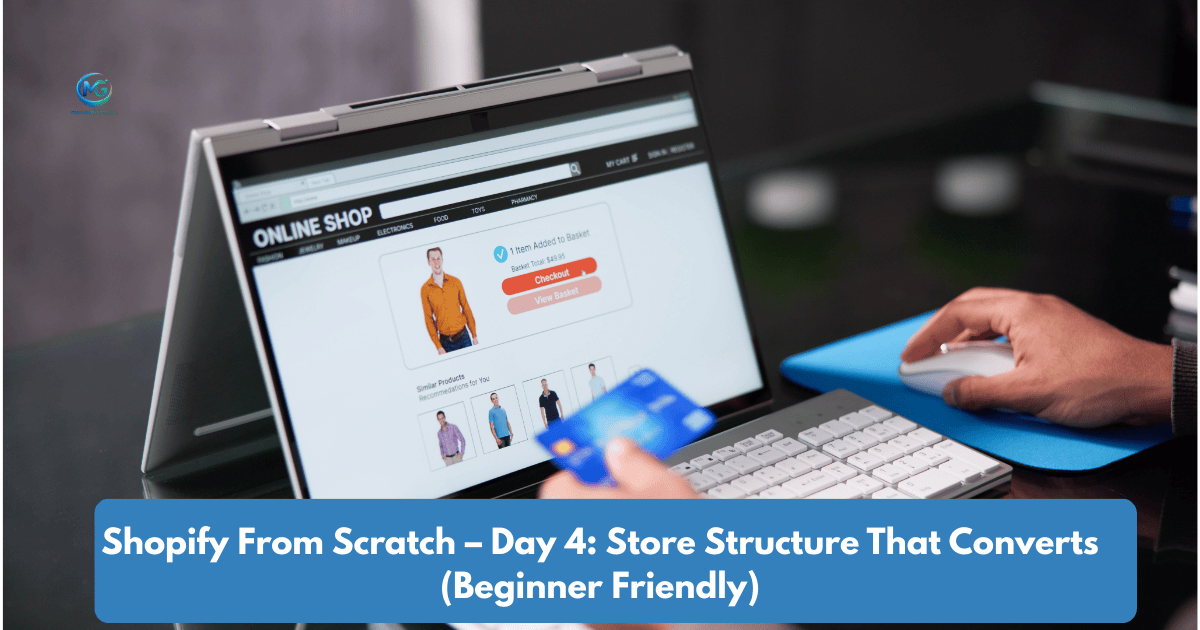
2️⃣ Product Page – The Decision Page
This is where conversion happens.
A beginner-friendly product page should:
explain the product clearly
show benefits (not just features)
answer common doubts
build trust
Structure it like this:
Product title
Clear images
Short problem-focused description
Benefits (bullet points)
Price
Call-to-action
Basic trust elements
Don’t overwrite.
Clarity beats creativity.
3️⃣ About Page – The Trust Page
People buy from stores they trust.
Your About page should:
explain why the store exists
show that real humans are behind it
reassure first-time buyers
You don’t need a long story.
Just honesty and clarity.
4️⃣ Contact Page – The Reassurance Page
Many beginners skip this.
Big mistake.
A simple Contact page:
builds trust
reduces fear
improves conversion
Include:
contact form
email address
response promise (eg: “We reply within 24 hours”)
5️⃣ Policy Pages – The Safety Net
You need these:
Privacy Policy
Refund Policy
Shipping Policy
Terms & Conditions
These pages:
protect you
reassure customers
are required by payment gateways
Keep them simple and clear.
How Navigation Should Look (Keep It Simple)
Your main menu should include:
Home
Shop
About
Contact
Footer should include:
Policy pages
Contact info
That’s it.
If visitors have to think where to click, structure is wrong.
Why Structure Converts Better Than Design
Design attracts attention.
Structure guides decisions.
A simple store with clear structure:
converts better
feels trustworthy
is easier to improve later
You can always upgrade design.
Fixing bad structure later is harder.
What Success Looks Like for Day 4
By the end of today:
✔ You understand which pages matter
✔ You stop adding unnecessary pages
✔ Your store has clear direction
No perfection needed.
Just clarity.
What’s Coming on Day 5
👉 Day 5: Payments, Shipping & Basic Settings (Without Fear)
This is where your store becomes functional.
Final Thought
A Shopify store is not a website.
It’s a decision-making system.
Structure first.
Design later.