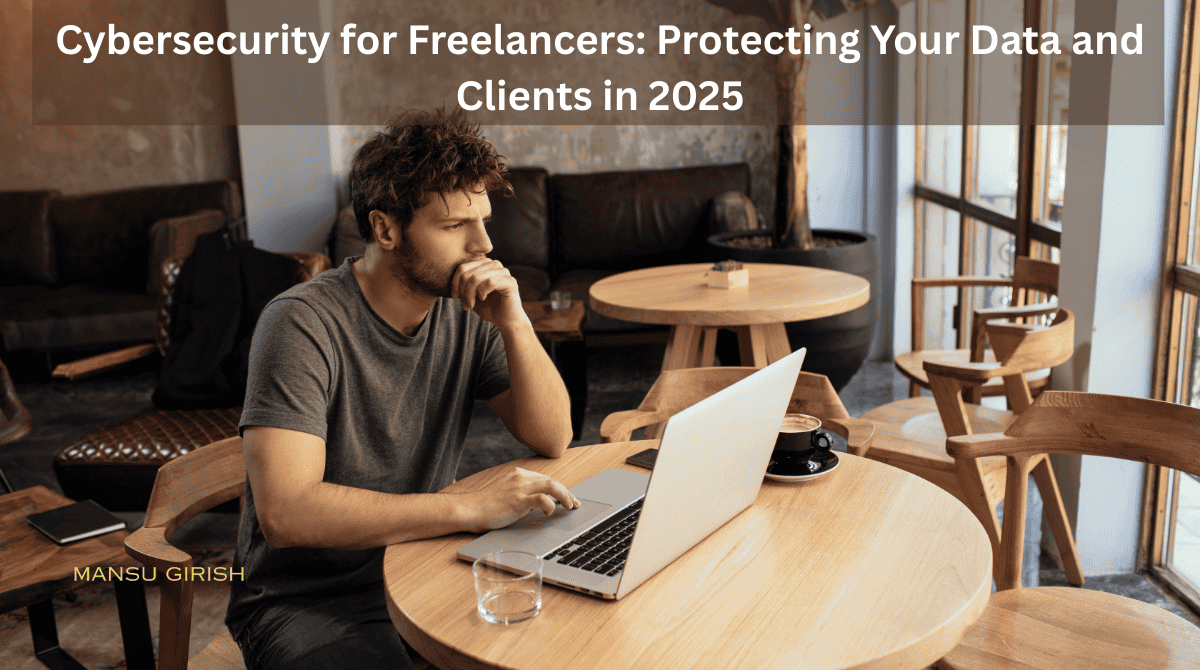
Freelancing has seen an unprecedented boom in recent years, with millions of professionals offering their services remotely. But with this freedom comes an increased responsibility: protecting sensitive data. As cyber threats grow more sophisticated in 2025, freelancers must stay vigilant to safeguard both their work and their clients’ trust.
Why Cybersecurity Matters for Freelancers
Unlike large corporations, freelancers don’t have dedicated IT teams or enterprise-level security systems. Yet, they often handle sensitive client information such as business plans, financial records, or intellectual property. A single breach could not only harm your client but also damage your professional reputation.
Top Cybersecurity Threats Freelancers Face in 2025
Phishing Attacks – Cybercriminals are using AI-driven emails and messages that look more convincing than ever.
Ransomware – Hackers target freelancers’ devices, locking critical files until a ransom is paid.
Public Wi-Fi Risks – Remote work in cafés and co-working spaces exposes data to potential interception.
Weak Passwords – Reusing passwords across accounts makes it easier for attackers to gain access.
Cloud Vulnerabilities – With more freelancers relying on cloud storage, misconfigured accounts can lead to data leaks.
Essential Cybersecurity Practices for Freelancers
Use Strong Passwords & 2FA: Adopt password managers and enable two-factor authentication.
Secure Your Devices: Keep operating systems, apps, and antivirus tools updated.
Encrypt Data: Use tools to encrypt sensitive files before sharing.
Avoid Public Wi-Fi Without a VPN: Always connect through a trusted VPN when working remotely.
Regular Backups: Store backups on secure, offline or cloud-based services.
Client Agreements: Include cybersecurity clauses in contracts to define data protection responsibilities.
Recommended Tools for Freelancers
Password Managers: LastPass, 1Password, or Bitwarden.
VPNs: NordVPN, ExpressVPN, or ProtonVPN.
Cloud Security: Google Workspace or Microsoft OneDrive with advanced encryption.
Antivirus & Firewalls: Malwarebytes or Bitdefender.
Building Trust Through Security
Clients in 2025 are more aware of digital risks than ever. By demonstrating a proactive approach to cybersecurity, freelancers can stand out as reliable, trustworthy professionals. Prioritizing security isn’t just about protecting data—it’s about building long-term client relationships.
Conclusion
Cybersecurity for freelancers in 2025 is not optional—it’s essential. By adopting strong digital habits, using the right tools, and staying informed about evolving threats, freelancers can protect themselves and their clients while thriving in the digital economy.