Many people enter freelancing with a job mindset.
They think:
“I’ll work when clients come”
“I’ll get paid for hours”
“More work means more money”
That mindset keeps freelancers busy—but not stable.
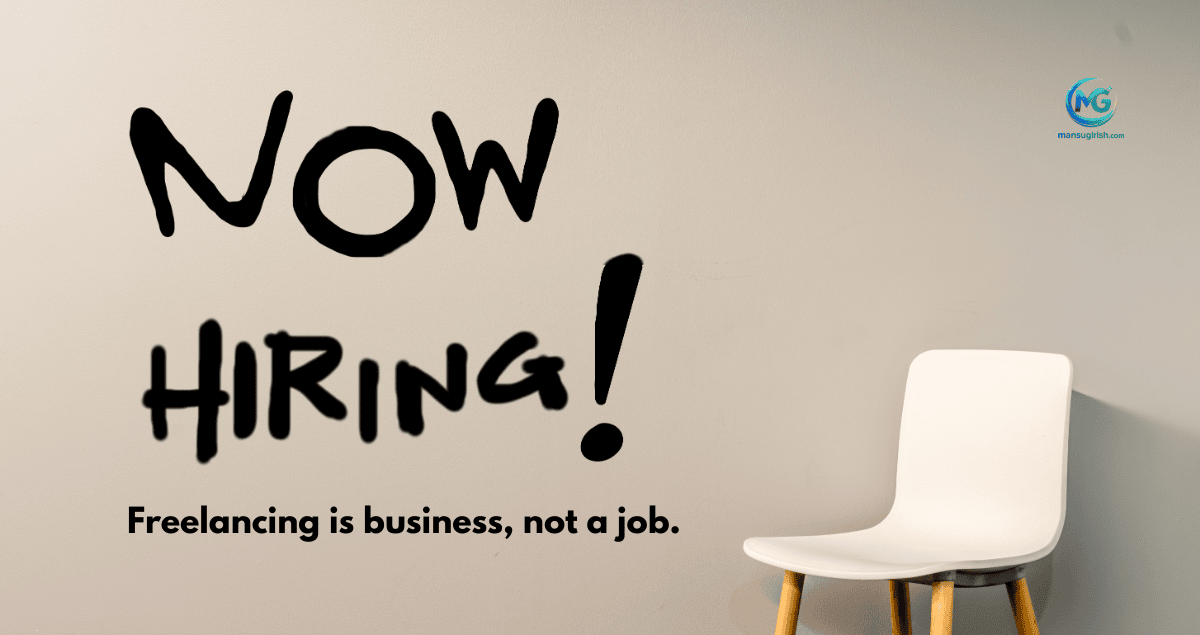
Freelancing is not a job.
Freelancing is a business.
And the moment you understand this, everything changes.
Why the Job Mindset Fails in Freelancing
Jobs provide:
Fixed roles
Fixed hours
Fixed pay
Clear direction
Freelancing provides none of these by default.
When freelancers treat freelancing like a job, they:
Wait for work instead of generating it
Depend on single clients
Compete on price
Feel insecure during slow periods
Burn out quickly
The job mindset looks for safety.
Freelancing demands ownership.
What It Means to Treat Freelancing as a Business
A business mindset changes your approach completely.
It means you:
Build systems, not just deliver tasks
Think in terms of revenue, not hours
Invest in skills, positioning, and processes
Plan for consistency, not randomness
Choose clients instead of accepting everyone
Businesses are proactive.
Jobs are reactive.
Freelancers Who Win Think Like Business Owners
Successful freelancers focus on:
Clear services (not vague skills)
Defined target clients
Repeatable workflows
Pricing based on value
Long-term relationships
They don’t ask:
“Who will give me work?”
They ask:
“How do I attract the right clients consistently?”
That shift alone separates struggling freelancers from stable ones.
Income Stability Comes From Systems, Not Hustle
Most freelancers hustle harder when income drops.
They:
Apply everywhere
Accept low-pay work
Overwork to compensate
Businesses do the opposite.
They:
Improve positioning
Refine messaging
Optimize conversion
Strengthen processes
Hustle fills time.
Systems create predictability.
Pricing Is a Business Decision, Not an Emotion
Job-thinking freelancers price based on:
Fear
Competition
Desperation
Business-thinking freelancers price based on:
Value delivered
Problem solved
Market positioning
Sustainability
Low pricing may get quick work.
It rarely builds a sustainable career.
Why Freelancing Gives Freedom Only When Treated as a Business
Freelancing promises freedom.
But freedom doesn’t come automatically.
Freedom comes from:
Clear offers
Predictable income
Controlled workload
Strong positioning
Without business thinking, freelancing becomes stressful.
With it, freelancing becomes scalable.
Final Thought
Freelancing is not about finding work.
It’s about building a system that brings work.
If you treat freelancing like a job,
you’ll always feel uncertain.
If you treat it like a business,
you build stability, growth, and freedom.