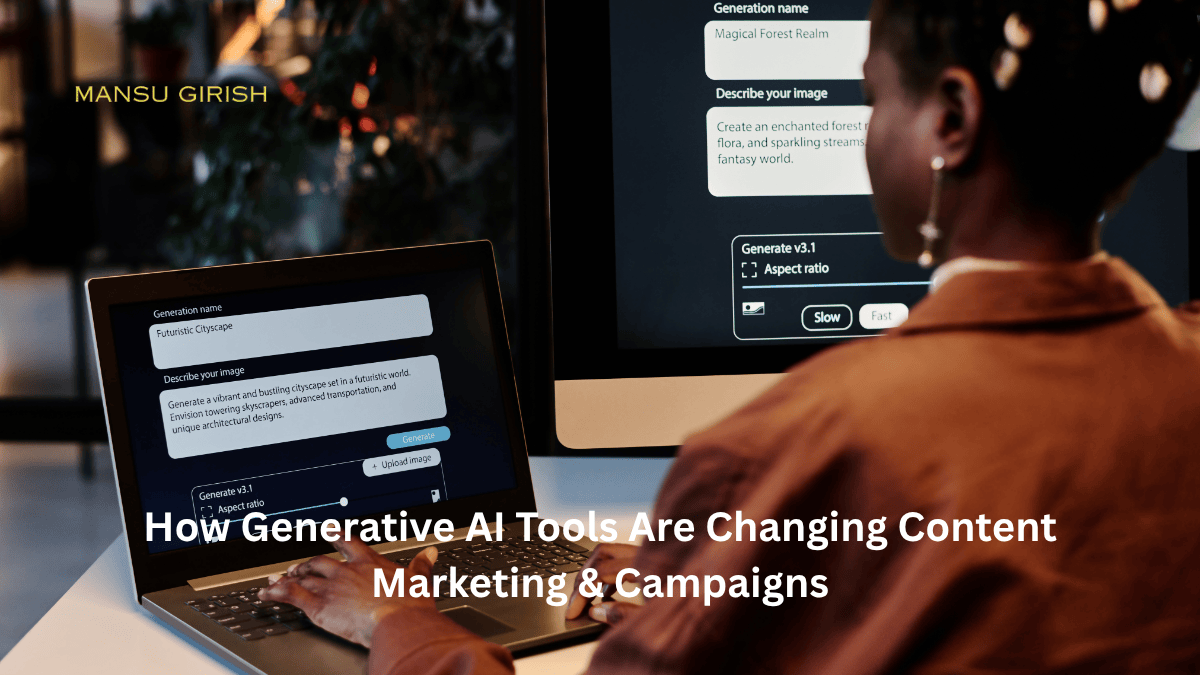
In 2025, Generative AI tools like ChatGPT, Google Gemini, and Jasper are completely reshaping how businesses create, distribute, and personalize content. What once took days — from brainstorming to publishing — now happens in minutes. These tools are not just automating writing; they’re revolutionizing entire marketing workflows.
Generative AI empowers marketers to produce high-quality content faster, improve audience targeting, and deliver hyper-personalized campaigns that resonate deeply with users. From blogs and social media posts to ad creatives and video scripts, AI has become an integral part of modern marketing strategies.
The Power of Generative AI in Content Marketing
1. Faster Content Creation
AI writing tools can generate blog posts, ad copies, and captions in seconds. This helps businesses maintain consistent publishing schedules without sacrificing quality. Platforms like Jasper and Writesonic allow marketers to adapt tone, emotion, and format instantly.
2. Smarter Campaign Personalization
Generative AI uses audience data to tailor messages based on behavior, preferences, and location. This hyper-personalization boosts engagement and conversions — something manual marketing teams struggled to achieve at scale.
3. Visual and Video Generation
AI isn’t limited to text anymore. With tools like Runway ML, Synthesia, and Midjourney, marketers can design visuals, product photos, and video ads that look studio-made — saving thousands in production costs.
4. Improved SEO and Keyword Strategy
Generative AI analyzes trends, competitor data, and search intent to suggest the most relevant keywords and content formats. This makes AI-assisted SEO more efficient, accurate, and results-driven.
Generative AI in Campaign Strategy
AI tools now play a key role in planning and analyzing campaigns. Marketers use predictive analytics and AI-driven insights to identify which creatives, messages, or timing will perform best. Campaigns are becoming more dynamic — constantly optimized in real time based on AI feedback.
For example, Google Ads’ Performance Max and Meta’s Advantage+ campaigns already leverage AI to optimize ad placement, audience targeting, and budget allocation automatically.
Ethical Considerations & Human Oversight
While AI tools are powerful, human creativity and judgment remain irreplaceable. Ethical concerns such as plagiarism, misinformation, and data bias must be addressed carefully. The most successful brands in 2025 are those that balance AI efficiency with human authenticity.
The Future of Generative AI in Marketing
Generative AI will continue evolving — soon, marketers may rely on autonomous AI agents capable of managing entire campaigns from ideation to performance tracking. As AI becomes more integrated, businesses that adapt early will dominate digital presence and engagement.
Conclusion
Generative AI isn’t replacing marketers — it’s amplifying their creativity. By embracing these tools strategically, businesses can save time, reduce costs, and create campaigns that truly connect with their audience.
2025 marks a new era where AI and human marketers co-create — faster, smarter, and more impactful than ever.