Introduction
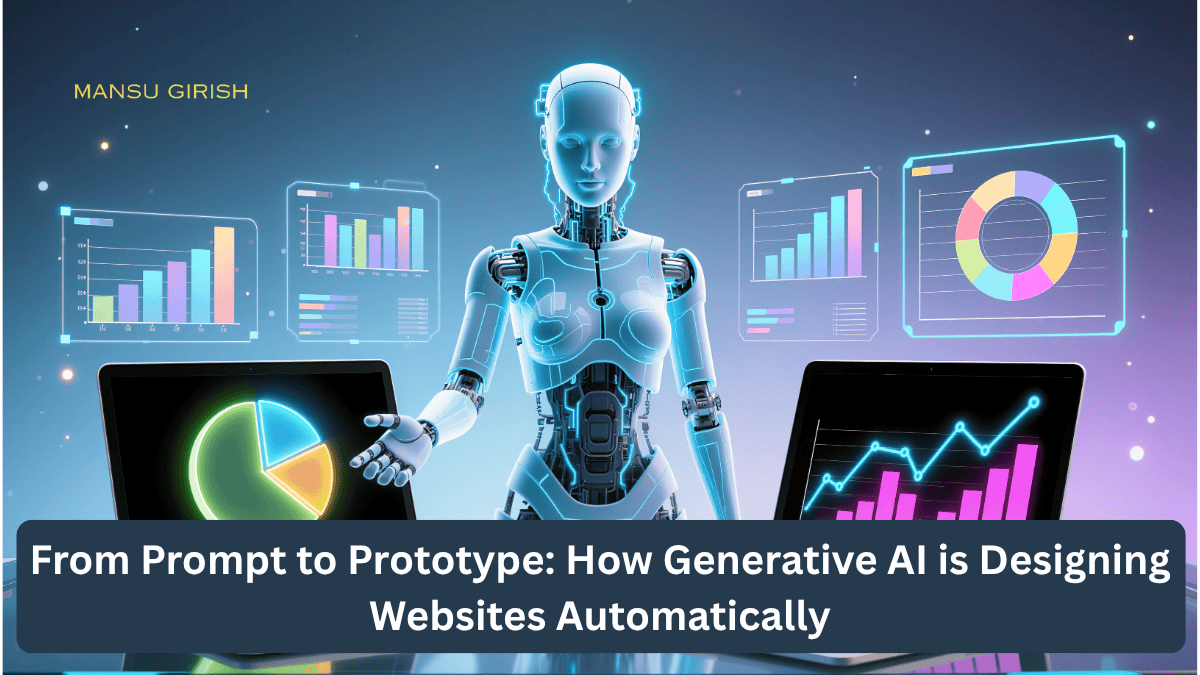
The world of web design is undergoing a massive transformation — and Generative AI is at the center of it. Gone are the days when designers spent hours sketching wireframes or manually coding page layouts. Today, with the power of AI tools, a simple text prompt can turn into a fully functional website prototype within minutes.
In 2025, the fusion of design intelligence and automation is not only changing how websites are built but also who can build them — making design more accessible to freelancers, small businesses, and creative entrepreneurs.
1. The Shift from Manual to Generative Design
Traditional design workflows required a deep understanding of UI/UX principles, layout structuring, and coding. But generative AI tools like Visily, Uizard, and Figma AI are breaking barriers by understanding user prompts such as:
“Create a modern portfolio website for a web developer with a dark theme and interactive projects section.”
Within seconds, these tools generate layouts, suggest color palettes, and even provide interactive prototypes — dramatically reducing the time between concept and implementation.
2. Why Generative AI Matters for Designers and Freelancers
Generative AI isn’t replacing designers — it’s amplifying creativity.
Here’s how it benefits the web design ecosystem:
Speed: Rapid mockups and prototypes in minutes.
Creativity: AI suggests design variations beyond human bias.
Accessibility: Non-designers can now create professional-grade visuals.
Client Collaboration: Instant concept previews improve feedback and approval loops.
Freelancers in Kerala and beyond are adopting these tools to deliver faster, more affordable, and data-backed web design solutions.
3. Tools Leading the Prompt-to-Prototype Revolution
Some of the most innovative tools shaping 2025 include:
Visily AI – Converts text prompts into editable UI mockups.
Uizard – Instantly transforms hand-drawn sketches or prompts into interactive wireframes.
Figma AI Assistant – Automates design layers, content, and responsive behavior.
Framer AI – Builds complete landing pages with live preview and hosting.
Each platform focuses on bridging the gap between imagination and execution — allowing anyone with an idea to see it come alive on screen.
4. The Future: AI-First Design Workflows
In the near future, we can expect:
Predictive design suggestions based on user intent.
Seamless integration with content management and analytics systems.
Real-time adaptation — where websites evolve dynamically based on user behavior.
Generative AI will soon become a co-designer — collaborating in real time and learning from design trends to deliver tailored digital experiences.
Conclusion
From prompt to prototype, AI is redefining what’s possible in web design.
For freelancers, agencies, and brands, embracing AI-driven tools means more time to focus on strategy, storytelling, and human creativity — while automation handles the repetitive work.
As 2025 unfolds, the question is no longer “Will AI design websites?”
It’s “How soon will you start using it?”