Introduction
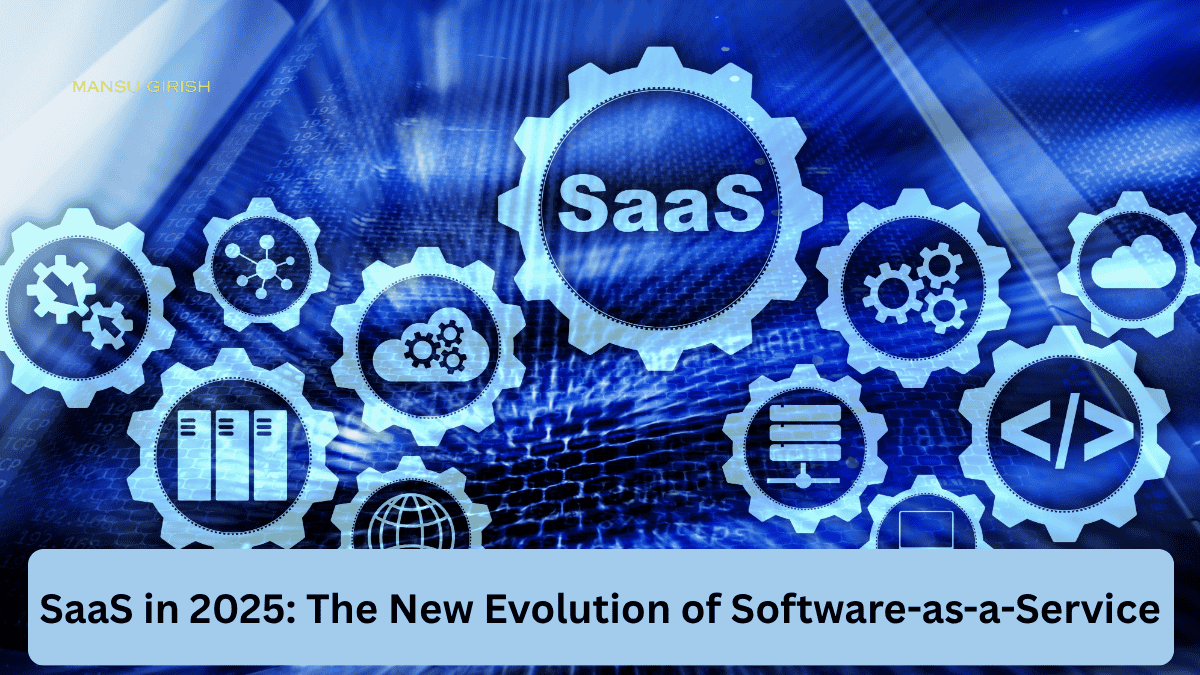
The SaaS (Software-as-a-Service) industry has evolved dramatically over the past few years, becoming one of the fastest-growing technology sectors globally. In 2025, SaaS is no longer just a subscription software model—it has transformed into a powerful ecosystem that integrates AI, automation, cloud scalability, and personalized user experiences. Businesses across every industry now depend on SaaS platforms for productivity, collaboration, analytics, automation, communication, and digital transformation.
This article explores how SaaS in 2025 is reshaping the modern business landscape and what trends companies should adopt to stay competitive.
What Makes SaaS in 2025 Different?
SaaS in 2025 combines AI, automation, low code tools, personalization, and predictive analytics to deliver software that adapts to users—not the other way around. Modern SaaS products are:
-
More intelligent (AI integrated in every function)
-
More scalable (cloud-native, microservices, Kubernetes)
-
More secure (zero-trust, passwordless authentication)
-
More user-friendly (no-code, voice UI, automation engines)
-
More affordable (usage-based pricing & modular subscriptions)
Top SaaS Trends in 2025
1. AI-Native SaaS
AI is no longer an add-on. In 2025, SaaS products come with:
-
AI assistants
-
Automated workflows
-
Predictive suggestions
-
Smart analytics dashboards
-
Conversational interfaces
AI-native SaaS reduces manual work by up to 60%.
2. No-Code & Low-Code Dominance
Businesses prefer tools that allow them to build applications without coding.
In 2025:
-
Workflow builders
-
Drag-and-drop app makers
-
AI-driven code generators
…make SaaS platforms more powerful and accessible.
3. Vertical SaaS Solutions
Instead of serving “everyone,” companies build industry-specific SaaS for:
-
Healthcare
-
Real estate
-
Logistics
-
Education
-
Hospitality
-
Finance
Vertical SaaS allows hyper-personalization and better ROI.
4. Subscription + Usage-Based Pricing
The traditional monthly subscription is being replaced by:
-
Pay-as-you-go billing
-
Feature-based pricing
-
User activity–based billing
This makes SaaS more flexible and scalable for businesses of all sizes.
5. Cybersecurity-Focused SaaS
With increasing cyberattacks, SaaS platforms use:
-
Zero-Trust Architecture
-
End-to-End Encryption
-
Biometric Authentication
-
Real-Time Threat Monitoring
Security is now a built-in feature—not an upgrade.
6. API-First Ecosystem
SaaS platforms are becoming modular, allowing companies to connect:
-
CRM
-
ERP
-
Billing
-
Analytics
-
Communication apps
API-first design ensures smooth integrations and better automation.
7. Unified Work Platforms
Instead of using 10–20 different tools, companies prefer all-in-one SaaS suites that offer:
-
Project management
-
Chat
-
Analytics
-
AI workflows
-
Automation
-
Cloud storage
-
Marketing tools
These unified platforms reduce costs and simplify operations.
8. Edge Computing + SaaS
2025 SaaS tools use edge computing to reduce latency, improve speed, and offer real-time processing—especially for IoT, fintech, and gaming.
9. Personalized User Experiences
AI adapts dashboards, recommendations, workflows, and UI automatically according to user behavior.
Benefits of SaaS in 2025
✔ Reduced operational cost
✔ Faster deployment
✔ Automatic updates
✔ Global collaboration
✔ Higher security
✔ Cloud-native scalability
✔ Personalized experiences
✔ Predictive analytics and automation
Businesses adopting modern SaaS tools gain massive competitive advantage.
Industries Impacted by SaaS in 2025
-
Healthcare – teleconsultation platforms, workflow automation
-
Finance – fraud detection, neobanking, fintech dashboards
-
Education – LMS, virtual classrooms
-
E-commerce – inventory automation, customer support AI
-
Marketing – CRM, analytics, automation tools
-
Manufacturing – IoT integrations, predictive maintenance
Future of SaaS Beyond 2025
The future will bring:
-
AI teams instead of tools
-
100% automated workflows
-
Mixed-reality collaboration SaaS
-
Decentralized SaaS (Web3 + blockchain)
-
Fully autonomous SaaS operations
SaaS will continue evolving toward intelligent, self-running business ecosystems.
Conclusion
SaaS in 2025 marks a new era of intelligent, cloud-native, automated, and personalized digital tools. Businesses that adopt modern SaaS solutions gain speed, agility, cost-efficiency, and scalability—essential qualities in a fast-changing digital economy. As AI and automation continue advancing, SaaS will remain the backbone powering innovation in every industry.